Building insulation follows the same principle as how we might dress to go outside on a cold day. While we layer up with coats, hats, scarfs & gloves to keep our bodies warm, on buildings we layer up with thermal insulation, which acts as a nice thick blanket surrounding the space we live in to keep us warm indoors. Both examples perform the same role. That is to minimise the loss of heat generated from within. Heat from our bodies in the case of clothing and heat generated by central heating / fires etc. in the case of our buildings.
If we don’t have adequate layers of thermal insulation, then we might experience high levels of uncontrolled heat loss as the heat seeks to escape from the building wherever it can.
Traditionally, to counteract this heat loss, we invest more energy to keep the internal temperature at a constant level and the occupants comfortable. Yet, we are currently witnessing extreme rises in fuel prices, making it much more costly to heat the spaces we occupy.
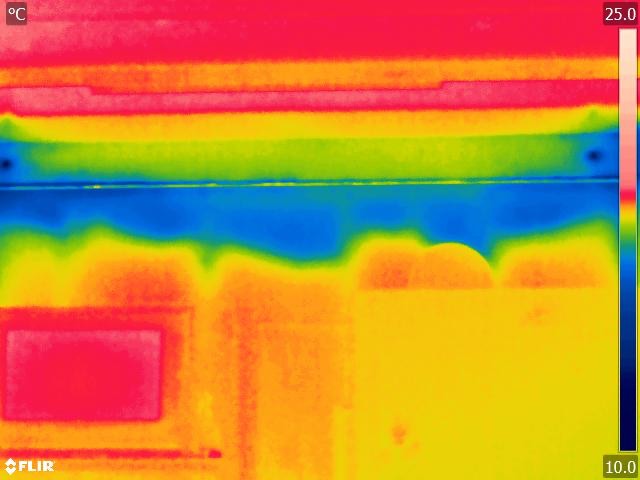
Thermal Image showing missing / slumped insulation in a timber frame wall. Photo by Fox (2012).
It is unlikely that the price of fuel will fall any time soon, and the trajectory suggests much greater costs in the future. Therefore, we need to consider ways in which we can minimise our energy demand, thereby taking control over our ability to maintain warm and comfortable buildings.
Of course, minimising energy use also equates to lower carbon emissions and harm to our environment, which is a very important factor in energy efficiency. However, it often takes hard economics to make people realise the need to lower demand.
At Fox Eco Architects, we take a fabric first approach to all of our projects, and as such put a lot of thought into the specification of building insulation (in combination with air-tightness) as we strive for highly efficient architecture. We are also PassivHaus designers, which helps us to design to the PassivHaus standard, a highly regarded energy efficiency standard for buildings that places high importance on insulation, airtightness and thermal bridging to minimise heat losses.
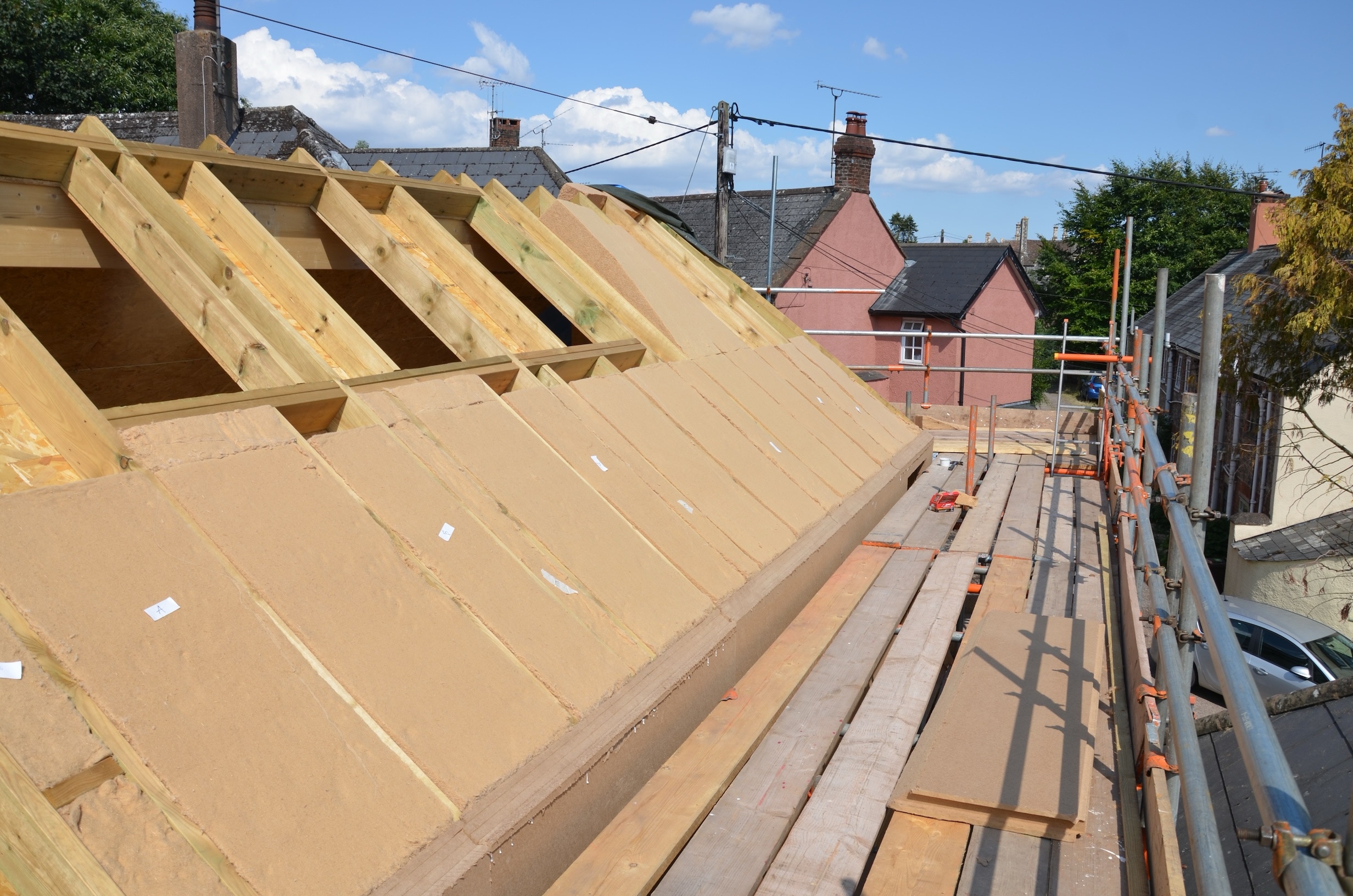
Installing lots of wood fibre insulation to a timber framed roof. Photo by Fox (2018).
Building insulation comes in all manner of different forms. There’s now a lot more to
choose from than the typical rockwool, foam and polystyrene options. We are passionate about natural materials, which invariably offer improved breathability and moisture control over more man-made products. Natural materials also contain fewer products that might contribute to an unhealthy indoor environment. As such, we favour insulation materials such as hemp, CobBauge, wood fibre, sheep’s wool and straw.
If you get the insulation (and airtightness) right, you won’t need much internal heating before a comfortable temperature is achieved. Therefore, the energy demand becomes insignificant.